
CONNECT THE VALLEY (CtV)
By visualizing where broadband infrastructure is lacking and where digital literacy resources are absent, geo mapping transforms raw data into actionable intelligence. Geo mapping creates a shared, evidence-based foundation that allows partners across industries to align their efforts, make their cases for funding, and measure their progress over time. For organizations, coalitions, and policymakers, it answers the most critical question in this work: where do we need to focus our efforts?
FCDI is working with the San Joaquin Valley Regional Broadband Consortium to create a broadband infrastructure map that will help inform broadband funding opportunities in the Central Valley. The map will integrate broadband availability data, community-driven speed test results, and socioeconomic and anchor institution overlays across Fresno, Madera, Tulare, and Kings Counties.
As we work to meet the broadband objectives outlined in the Sierra San Joaquin Jobs (S2J2) Regional Investment Plan, we lead Connect the Valley, a regional coalition advancing digital equity across Madera, Fresno, Kings, and Tulare counties. CtV aims to expand broadband infrastructure, boost digital literacy, and advocate for policy changes to ensure all Central Valley residents can access the internet for modern needs. You can learn more about this coalition, or bring your own organization into our coalition, by visiting connectvalley.org.
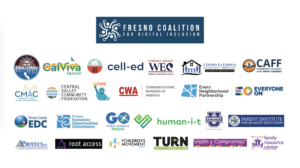
Current Members include:
GEO MAPPING
By visualizing where broadband infrastructure is lacking and where digital literacy resources are absent, geo mapping transforms raw data into actionable intelligence. Geo mapping creates a shared, evidence-based foundation that allows partners across industries to align their efforts, make their cases for funding, and measure their progress over time. For organizations, coalitions, and policymakers, it answers the most critical question in this work: where do we need to focus our efforts?
FCDI is working with the San Joaquin Valley Regional Broadband Consortium to create a broadband infrastructure map that will help inform broadband funding opportunities in the Central Valley. The map will integrate broadband availability data, community-driven speed test results, and socioeconomic and anchor institution overlays across Fresno, Madera, Tulare, and Kings Counties.
SPEED TESTS
We’ve already seen that the broadband access and affordability data that internet service providers (ISPs) report to regulators often paints a rosier picture than what residents actually experience. In-home speed tests are a critical tool for digital equity work because they capture the truth on the ground, in the homes of the people most likely to be underserved. Advertised speeds reflect a best-case scenario under ideal conditions, while low-income households, rural residents, and communities of Color are disproportionately likely to be on older infrastructure, shared connections, or plans that throttle during peak hours.
In partnership with Fresno State, we’re launching a study to measure the real cost, quality, and speed of internet access across Fresno County households. Using household surveys and Raspberry Pi devices installed in participating homes, the study will collect verifiable, community-sourced data on internet speeds, reliability, and pricing. It is also designed as a replicable model that counties across California can adopt.
Participating households will be stratified into three distinct bands—high-poverty urban neighborhoods, rural communities, and affluent areas—to examine whether and how broadband quality, cost, and plan structures vary across the socioeconomic spectrum. We will oversee on-the-ground outreach efforts led by Fresno Housing and regional labor organizations such as State Center Federation of Teachers, Communications Workers of America, and Fresno Teachers Association, who serve as trusted messengers within the Fresno community.